Managing a staffing firm across state lines creates a dense web of payroll, insurance, and labor requirements. One missed registration or outdated client agreement can put placement margins at risk. A repeatable staffing agency compliance process helps you expand without losing control of the details.
Talk to USA Staffing Services about back-office support for your next contract placement.
Staffing agency compliance for multi-state operations means managing payroll taxes, workers’ compensation, onboarding, contracts, and employment rules in every worker’s jurisdiction. Review each new placement before the start date, document who owns each requirement, and consult qualified legal, tax, and insurance professionals when rules are unclear.
This checklist organizes the questions and records your team should review before a worker starts. It is general information, not legal, tax, or insurance advice. The path begins with a state-by-state control list.
Multi-state staffing agency compliance checklist
A multi-state staffing agency compliance checklist gives owners one repeatable gate before every placement. USA Staffing Services helps independent staffing firms coordinate back-office work, while firm owners and their professional advisers confirm the requirements that apply to each worker and client.
Growing your staffing firm into new states creates new paths but adds risk. Each new state works as its own stream because laws change the moment a worker crosses a border. To keep up back-office compliance support, you must track local rules for taxes, pay, and leave. Doing these tasks on your own can pull you away from finding new clients and filling open roles.
Each state is a distinct workstream
When you place a worker in a new state, you create a “nexus” or a legal link to that area. This link means you must follow that state’s unique rules for hiring and pay. One state might need weekly pay, while another allows checks every two weeks. Sick leave laws also vary widely across the country.
You cannot assume that what works in your home state will pass a test elsewhere. This is why many firms use back-office partner benefits and outsource employer liabilities to an EOR for staffing agency to handle these shifts. A partner manages the local filings and employer obligations so you can stay focused on your core sales goals.
Even if you hire a third party to help, the IRS says that employers must still pay federal taxes. If a provider fails to pay, the debt falls back on your agency. You must check that every state filing is right and on time.
This includes income tax, job loss tax, and local fees. Keeping a clean paper trail is the only way to avoid big fines during a state or federal review. Audits often happen months or years after a placement, so good records are a must.
Core items for your growth checklist
Before you place your first worker in a new state, you must set up your legal setup. Start by filing with the Secretary of State to get your legal right to work there. Next, you need a person to receive legal papers in that state.
Once your entity is set, open your tax accounts for both pay and job loss. Missing even one of these steps can block your ability to pay workers or bill clients on time. It can also cause issues with your workers’ compensation coverage in that new market.
New hire steps also change as you grow. Most firms must use the I-9 form to check if workers can legally hold a job in the U.S. Some states go further and need you to use the web-based E-Verify system.
The Department of Labor works with agencies to keep work standards high. Following these federal and state rules protects your firm from being shut down or losing its license to work in key markets. It also builds trust with your clients.
Worker classification risks
State lines also change how you group your workers. Some states have strict tests to see if a worker is a staff member or a 1099 contractor. Choosing the wrong type can lead to back taxes and fines. This is a common area where worker classification risks can hurt your profit.
A good partner helps you audit these groups before a problem starts. This keeps your firm safe while you scale your team into new areas. You should check the latest rules every time you open a new desk or start a new contract.
Use this table to track who owns each part of your staffing agency compliance plan. It shows when to start each task so you never miss a deadline during a new launch.
| Compliance Area | Owner | Trigger |
|---|---|---|
| Tax Nexus | Payroll Team | First worker hired in state |
| Workers’ Comp | Risk Manager | New state entry or renewal |
| Local Labor Laws | HR Manager | New state hiring starts |
| Entity Filing | Firm Founder | Before hiring in new state |
| I-9 and E-Verify | Hiring Team | New hire start date |
How do staffing agencies set up multi-state payroll tax?
Payroll tax setup is a foundational staffing agency compliance control that must be completed before the first placement. USA Staffing Services can coordinate payroll and back-office operations, while the staffing firm and qualified tax advisers verify federal, state, and local registrations, deposit schedules, and filing duties.
Starting a new staffing firm is a big step. You likely want to focus on sales and finding the right talent. But you must deal with tax rules before you hire anyone. Setting up your tax accounts early is a key part of staffing agency compliance. It helps you avoid fees and keeps your firm in good shape. You need to know which taxes to pay and where to send the money.
Most staffing firms work in many states. This adds work to your payroll tasks. Each state has its own group that handles taxes. You must talk to these groups to get the right tax IDs. You also need to look at local rules in cities or counties. This section shows the steps to get your tax setup right from the start.
Setting up state tax accounts
When you hire a worker in a new state, you are an employer there. You must sign up for state tax accounts. Most states ask for two main accounts. One is for income tax withholding. This is money you take from a worker’s pay. The second is for unemployment insurance. This tax is one that you pay as the business owner.
You can work with a partner for your payroll needs. This can save you time and stop errors. But you must remember that you still owe the tax. The IRS says that employers still owe their taxes even if they use a third party. Getting back-office compliance support helps you track these tasks. It ensures you do not miss a due date.
- Apply for a Federal EIN: You need a federal number before you can get state IDs. You can get one for free on the IRS site. It is the first thing you need to do.
- Find state tax offices: Look for the tax office in every state where you plan to have workers. Each state has a different name for this group. Reach out to them for your state IDs.
- Sign up for withholding tax: Sign up for an account to take out state income tax. You will need to give them your EIN and business data. They will give you a state tax ID number.
- Set up unemployment insurance: Sign up with the state labor office. This account is for State Unemployment Insurance. This tax is one that only the employer pays. Your tax rate will change over time.
- Check for local payroll taxes: Look for city or county taxes in the areas where your workers are based. Some cities have their own tax. Do not assume that state sign up covers everything.
- Create a payroll record system: Set up a way to store all your tax data. You must keep records of wages and taxes for at least four years. Good records will help you if you ever face an audit.
Local rules and records
Local taxes can be tricky for staffing firms. Some areas have a tax for every worker you hire. You must find out if the work site triggers these rules. If you miss a local tax, the fines can add up fast. It is best to use a tool that knows these local laws. This keeps your firm safe from sudden costs.
Keeping clear records is as vital as paying the tax. You need to have proof of every payment you make. This includes the date, the amount, and the tax type. Following a first placement compliance guide helps you build a strong system. It ensures you have the data you need to stay in the clear.
What workers’ compensation requirements apply to each assignment?
Workers’ compensation is an assignment-level staffing agency compliance control, not a one-time policy purchase. USA Staffing Services supports back-office coordination, while the staffing firm, client, insurer, and licensed advisers confirm coverage, class codes, worksite duties, and state-specific requirements before work begins.
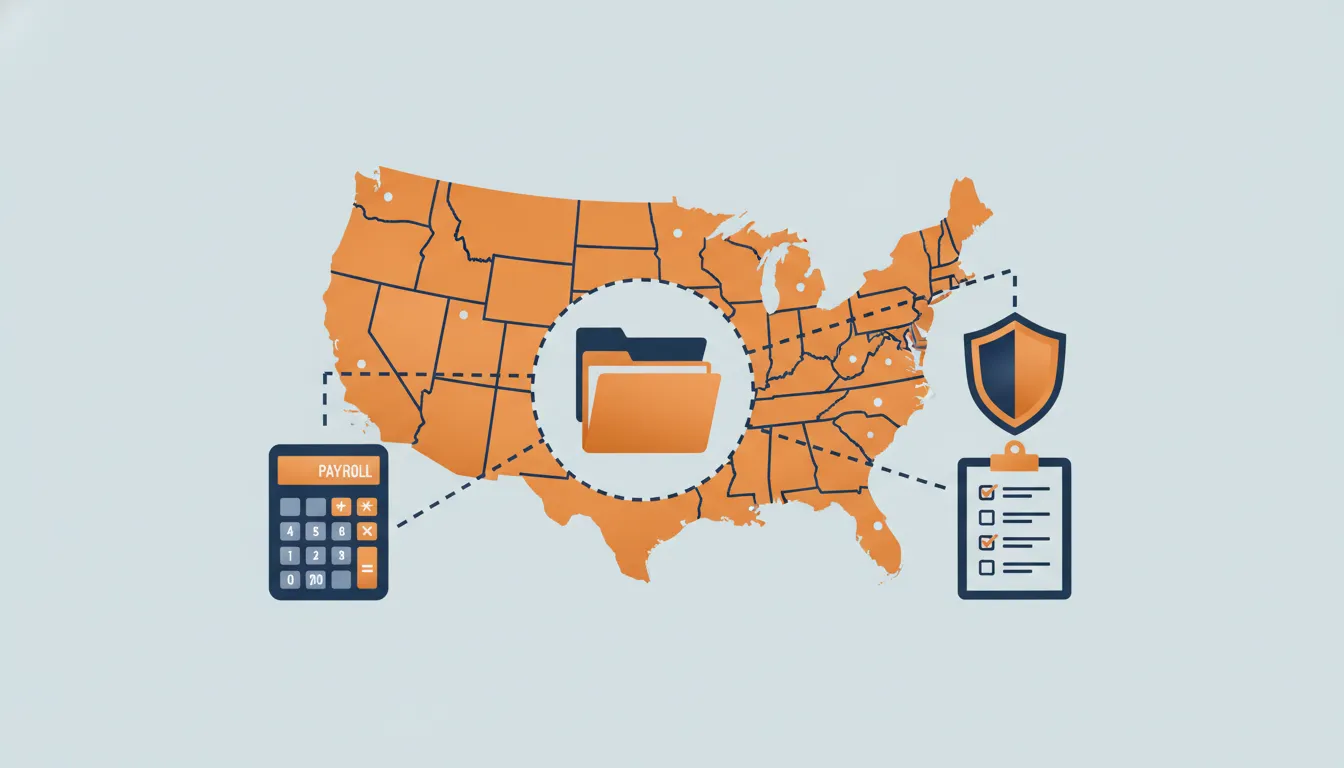
Handling workers’ compensation is a top task for any firm owner. It is a core part of back-office compliance support.
Each state has its own set of laws for how you must cover your team. If you miss a small point, you could face big fines or even a lawsuit. Working with a partner can help you track these needs across state lines. This keeps your business safe while you focus on sales and growth.
Master state rules and class codes
Every job has a risk level. States use class codes to set the price of your insurance based on that risk. A desk job has a low risk code. A job on a building site has a high one. You must pick the right code for every person you place. If you use the wrong code, you might pay too much for your cover. Or, you might get a big bill after a surprise audit. Some states use their own funds for this cover. In these places, you cannot use a private company. Other states let you pick your own provider. You need to know which rules apply in every place where you have workers. The IRS points out that even when you use a third party for payroll, you are still in charge of your tax duties. In the same way, you are in charge of your risk data. You must give your partner the right facts to keep your firm safe.
Screen client sites for hazards
Before you send a worker to a client, you must check the site. Look for risks that could lead to a fall or a hurt back. A safe site means fewer claims and lower costs for you. You should also ask for a certificate of insurance from your clients. This proves they have their own cover for their staff and site. It adds a layer of safety for your agency. If a client changes the work your person does, you must know fast. A worker hired for office help who starts to move heavy boxes is now in a new risk class. This shift must be told to your carrier right away. If you do not report it, your claim might be turned down. Keeping your data fresh is a must for staffing agency compliance. It ensures you have the right cover for the real work being done.
Report claims and track placement changes
When a worker gets hurt, speed is key. You must report the claim to your carrier as soon as you find out. Waiting can make the claim cost more. It can also lead to legal fines in some states. Having a clear plan for claims helps you stay in control of the process. It shows your team and your clients that you take safety seriously. You should also watch for job shifts. If a placement lasts for months, the tasks may change. Check in with your clients often to see if the worker is still doing the same work. This helps you keep your codes and rates in line. If the job changes, update the record with your worker classification risks in mind. Good tracking keeps your costs low and your firm out of trouble.
How can agencies standardize compliant worker onboarding?
Standardized onboarding turns staffing agency compliance into a documented process instead of a last-minute scramble. USA Staffing Services can support temporary-worker HR and back-office administration, while the staffing firm confirms that each required form, notice, verification, and client-specific acknowledgment is complete before the worker starts.
Bringing on new talent is a fast-paced process for most staffing firms. But speed should never come at the cost of legal safety. A strong onboarding plan helps you meet staffing agency compliance rules from day one. It starts with a clear list of every form a new worker must sign before they start their first shift.
A back-office partner can help you manage these tasks without slowing down your growth. Using back-office compliance support ensures that no steps are missed during a busy hiring week. This allows you to focus on sales while experts handle the paperwork.
Complete essential tax and legal forms
The first step in any onboarding workflow is the Form I-9. This document proves that a worker has the legal right to work in the United States. You must complete this form for every new hire, even if their role is short. Many firms also use E-Verify to double-check these details against federal records quickly.
You also need to collect federal and state tax forms. The W-4 form tells you how much tax to hold from a worker’s pay. If you outsource these tasks, remember that you are still liable for tax deposits. The Internal Revenue Service states that employers remain liable for federal employment taxes even when using third-party providers. Clear talk with your payroll partner is key to staying safe.
Don’t forget background check consent forms. If your clients need drug tests or criminal history checks, you must get written permission first. This protects the worker’s rights and keeps your agency in line with privacy laws. Keeping these forms on file is a vital part of your risk plan.
Follow state and local notice rules
Compliance gets harder when you place workers in different states. Many states need specific wage notices that tell the worker their pay rate and payday schedule. Some cities have their own rules too. You must give these notices in the worker’s primary language if required by local law. This ensures they understand their rights from the start.
State notices often cover more than just pay. They might include info about sick leave, safety rules, or workers’ compensation. Missing just one notice can lead to big fines during an audit. Working with an outsourcing compliance expert helps you track these changing rules. It saves you from having to research laws in every new market where you place talent.
Keep audit-ready records
Good recordkeeping is the final piece of the onboarding puzzle. You should store all forms in a way that is easy to find during a check. Federal rules say you must keep I-9 forms for at least three years after the date of hire. You must also keep them for one year after work ends. Storing these files in a secure digital system is the safest bet for most firms.
The Department of Labor supports a close working bond between staffing firms and the public workforce system. Keeping clean records shows that you take this bond to heart. It also makes it easy to prove that your agency follows fair hiring practices. If an auditor asks for proof, you can provide it in minutes rather than days.
Regular internal audits help you find gaps before they become problems. Check a group of files each month to make sure signatures and dates are in place. This habit keeps your team sharp and ready for any outside review. It builds a culture of safety that helps your staffing firm thrive in a busy market.
How should staffing agencies strengthen client contracts?
Clear client contracts are a central staffing agency compliance control because they assign responsibilities before an issue occurs. USA Staffing Services supports back-office operations, but each staffing firm should work with qualified counsel to document supervision, safety, time approval, rate changes, indemnity, and incident-reporting duties.
Working across state lines adds new risks to your business. A strong contract helps you manage these risks. It sets clear rules for both you and your client. This is a big part of back-office compliance support for any growing firm. You must define who is in charge of each task. This keeps your team safe and your business legal. Poor contracts lead to messes and high costs when problems happen.
A good contract acts as a map for your deal. It guides how you and your client work together. When you place workers in new states, laws can vary a lot. Your contract must be strong enough to cover these gaps. Without clear terms, you may face fines or loss of profit. Clear language helps you stay safe and grow with trust.
Define shared duties and safety
Contracts must state who directs the workers each day. Your client usually handles day-to-day work tasks. They are also in charge of site safety. You should include terms that allow you to inspect the work site. This helps you check if the site is safe for your staff. If a client changes a job role, they must tell you right away. A new role might need different insurance or safety gear. This is a key step in staffing agency compliance.
Indemnification is another key part of your deal. This part of the contract says who pays if a lawsuit happens. It protects you if a client’s mistake causes an injury. It also protects the client from your errors. You should also list which party covers specific taxes. The IRS states that employers stay at fault for federal tax payments even when they use third-party help. Clear terms help everyone know their role and avoid legal fights. It keeps your firm safe from big tax bills you did not expect.
Set clear rules for work hours
Timekeeping rules must be strict and clear. Your contract should say how clients approve hours. It should also set a deadline for these sign-offs. This ensures you pay workers on time and avoids payroll errors. If a client wants to change a worker’s shift, they should tell you in writing. This keeps your records correct for state labor audits. Clear records protect you from claims of unpaid wages. They also make it easier to handle billing questions from your clients.
Job changes often happen fast in staffing. Your contract needs a plan for these moves. Specify how much notice a client must give before they end a placement. This gives you time to find new work for the staff member. It also helps you manage your cash flow. Firm rules on these topics build trust with your clients. They know what to expect and so do you. It makes the whole process smoother for everyone.
Plan for legal rate changes
State laws change often. New laws can raise the cost of doing business. Your contracts should allow for rate changes when laws change. This includes new sick leave rules or higher tax rates. If a state raises its lowest wage, your bill rate should adjust to match. This protects your profit margin and keeps your firm healthy. It is vital to have a clause that lets you update rates without a whole new contract. This saves time and keeps your business moving.
You should also list how you will handle extra costs like new health laws. Some states have their own worker rules that cost more to follow. Your contract should let you pass these costs to the client. This prevents your business from losing money on a bad deal. Work with a legal team to make sure these terms are fair and clear. This early step helps your firm stay strong as you grow into new markets. You will be ready for any new rule that comes your way. Protecting your business now means more success later.
How do agencies control classification and co-employment risk?
Classification and co-employment reviews protect staffing agency compliance by clarifying the worker relationship and each party’s duties. USA Staffing Services can help coordinate the employer-of-record back office, while staffing firms and qualified counsel evaluate the facts of each assignment instead of relying only on contract labels.
Keeping staffing agency compliance starts with a clear view of your staff. Note that this post is not legal advice. You should talk to a lawyer about your exact needs. Marking workers wrong can lead to large fines and back taxes. It is key to know if a worker is a staff member or a solo worker from day one. When you get it right, you protect your firm from costly checks and legal fights.
The rules for worker status change often. This makes it hard for busy firm owners to keep up. But the cost of a slip is too high to ignore. A single bad choice on a high-pay role can wipe out your gains for the year. This is why you need a clear way to review every new hire before they start their first shift.
Know the worker status
The name you give a worker does not set their status. State and federal groups look at the real bond between you and the person. They check who controls the work and how the pay flows. You can read more about worker classification risks to stay safe. Most states use tests to see if a worker is truly in business for themselves. If they rely on you for their main income, they might be on your staff.
The Department of Labor works with firms to help them follow these rules. They want to make sure every worker gets the right pay and perks. As a firm owner, you must prove that your solo workers meet the legal bar. This often means they must have their own tools and set their own hours. If you direct their daily tasks, the law will likely see them as your staff.
Manage joint employment
Joint employment happens when two firms share control over a worker. This is common between a staffing firm and its client. If you do not manage this well, you may face legal threats for wage claims. Both firms could be on the hook for back pay or fines. This is a top worry for many who place staff at client sites. You must define roles clearly in your deals to keep risks low.
Using a partner for back-office compliance support helps you track these roles. A good partner will check your deals and worker files. They help you stay in line with state laws that vary across the country. Even with a partner, the IRS says the employer stays liable for tax payments. You must verify that all taxes are paid on time and in full to avoid tax liens.
Review pay rules
You must also check if workers should get extra pay for long hours. This means looking at whether they are exempt or non-exempt. Misjudging a worker’s tasks can lead to big costs in court. You cannot just pay a flat rate to avoid extra pay. The worker must also pass a tasks test. This test checks if they manage people or use high-level skills. If they do manual work, they almost always get extra pay.
A steady review way helps you find errors early. Audits of your pay and job tasks keep your firm ready for any check. You should keep records for at least three years to show you followed the law. When you have good data, you can answer questions from the state with ease. This peace of mind lets you focus on finding the best talent for your clients.
Frequently Asked Questions
What is staffing agency compliance?
Staffing agency compliance means following all laws and rules that govern employment. This includes federal and state tax laws, labor laws, and safety rules like workers compensation. For agencies working in many states, it also means meeting the local rules in each area where they place workers. Staying compliant helps firms avoid large fines and legal trouble while protecting their good name.
What are the key areas of staffing agency compliance?
The main areas include tax filings, labeling workers, and onboarding tasks like the Form I-9. Agencies must also manage client contracts and workers compensation insurance. In a multi-state model, firms must track payroll tax rules for each state. Missing just one area can lead to audits or loss of business licenses.
How can staffing firms avoid compliance fines?
Firms can avoid fines by running regular internal audits and training their staff on new laws. Many small owners use a back-office partner to handle these tasks. According to the IRS, employers stay responsible for taxes even when they outsource payroll. A partner like USA Staffing Services helps manage these risks so owners can focus on sales.
Why is worker classification a major risk for agencies?
Naming worker types is a risk because wrongly labeling an employee as a contractor can lead to back taxes and fines. The Department of Labor and the IRS look closely at how firms group their staff. This is harder in a multi-state setup where local rules vary. Proper worker classification ensures that the agency pays the right taxes and provides required benefits to every staff member.
Ready to talk to USA Staffing Services about back-office support?
Managing multi-state staffing compliance is a hard job that takes you away from sales. If you wait to fix these gaps, you risk big fines and lost trust that take many months to repair. You can start protecting your firm today by outsourcing compliance to a partner who handles the details for you. When you have an expert to watch the fine print for you, you gain the peace of mind to scale your team fast. Do not let these small tasks slow you down and hurt your long-term growth.
Ready to get a free consultation? Call +1 (414) 530-4045 to talk to USA Staffing Services about back-office support.
For additional support, compare Staffing Agent Program or staffing franchise alternative to choose the right next step for your staffing firm.

Written By
David Ellison
Staffing Operations & Risk Management Specialist
David Ellison is a detail-oriented Staffing Professional specializing in risk management, operations, and back-office support. At USA Staffing Services, he empowers staffing firms by managing payroll, workers' compensation, and HR compliance, enabling them to focus on talent acquisition and business growth.